I wrote a lot of apology texts that summer.
Long ones. Careful ones. The kind where you draft and delete and draft again because you want to get it exactly right, because you know the other person is already primed to read the worst version of whatever you send.
I apologized for my tone. For my sarcasm. For how things had landed. For the drama of leaving a group chat. For not communicating better. For not being easier to be around.
I meant all of it. And I also knew, somewhere underneath the apologies, that I was apologizing for being sick in a way that had inconvenienced people. For not being the version of myself they preferred. For needing too much for too long.
That’s a hard thing to name in real time. It’s easier to see in retrospect.
When you’re chronically ill, communication becomes its own kind of labor. You’re constantly calibrating: how much to share, how to frame it, whether to mention the pain at all or just show up and smile and hope nobody notices you’re white-knuckling through it. You get so good at the performance that people forget there’s anything underneath. And then when something slips through — when the frustration shows, when the sarcasm has an edge, when you’re clearly not fine — it reads as a personality flaw instead of what it actually is. Evidence of someone who has been carrying something heavy for a very long time.
What I was actually trying to say, in all those careful texts, was: I am not okay and I need you to stay anyway.
I just didn’t know how to say that yet.
Some of those relationships didn’t survive the summer. And I still have things they left behind.
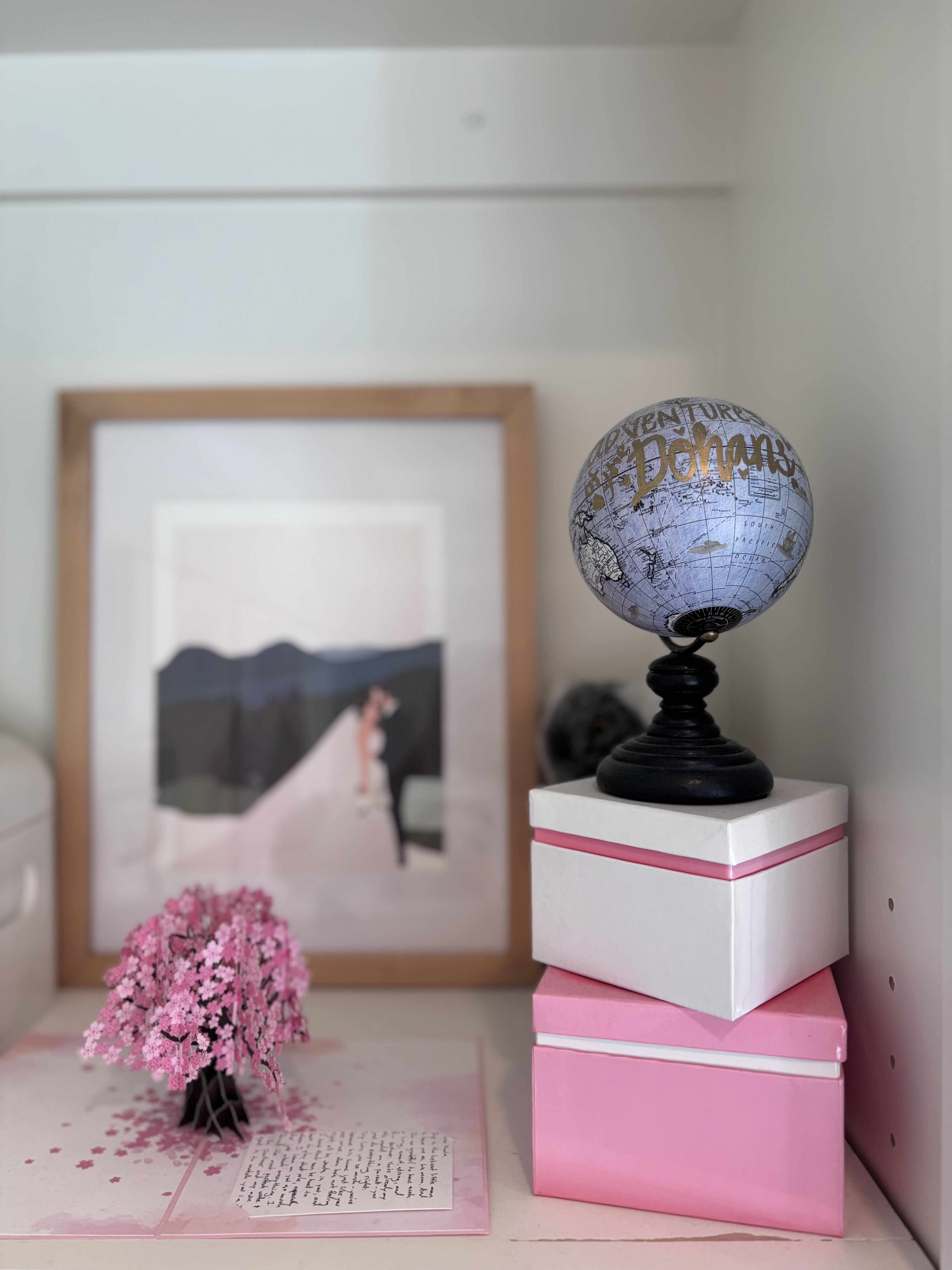
A globe with handwriting on it. “Adventure of the Dohans” — the places we’d been together, marked by someone I thought would be there for whatever came next.
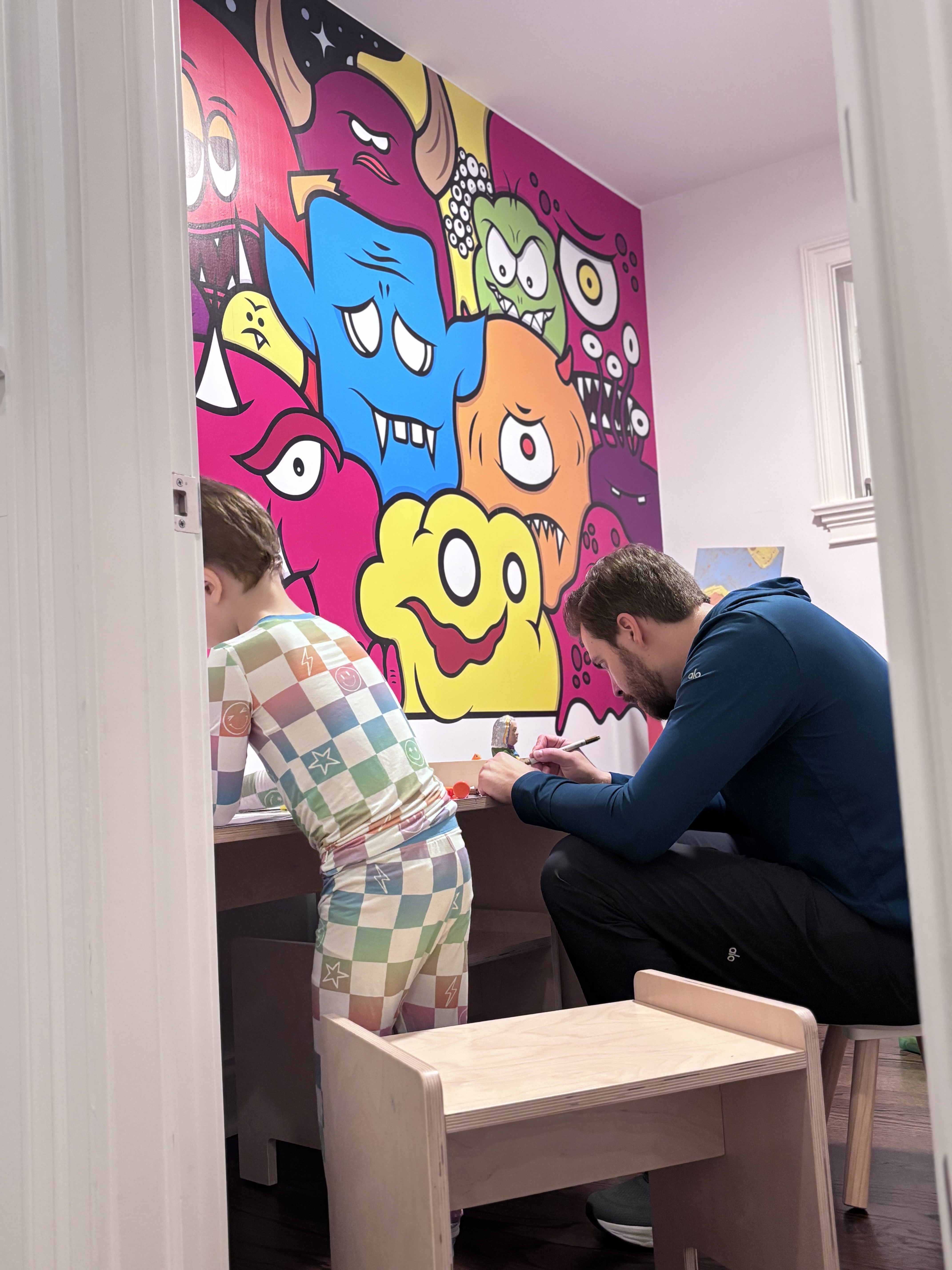
A wallpaper mural in my son’s art room — space monsters and the words Monster Room in loopy letters, made by someone who I thought would be in our lives forever. A box of cards and ticket stubs and wristbands in the top of my closet.
I kept all of it. Not because I’m waiting for something. Not because I haven’t moved on.
Because those things existed. The memories they represent were real, even if the relationships that made them are gone. I don’t want to pretend otherwise.
There’s a version of moving on that looks like erasure — clearing every trace, acting like it never mattered. I understand the impulse. But I don’t think that’s actually healing. I think it’s just a different kind of hiding.
Grief is allowed to be complicated. You can miss people who hurt you. You can love memories that belong to relationships that ended badly. You can hold the warmth of what was and the ache of how it ended at the same time, and you don’t have to choose between them.
The globe sits on a shelf. I walk past it every day.
Some days it’s just a globe. Some days it’s heavier.
Both are okay.
If you’ve ever found yourself apologizing for your own pain — editing yourself into knots trying to make your reality more palatable for the people around you — the problem was never your communication.
It was asking people to understand something they hadn’t lived.
We don’t have to resolve everything in order to move forward. Sometimes moving forward just means letting the complicated things exist, taking up their honest amount of space, without asking them to be simpler than they are.