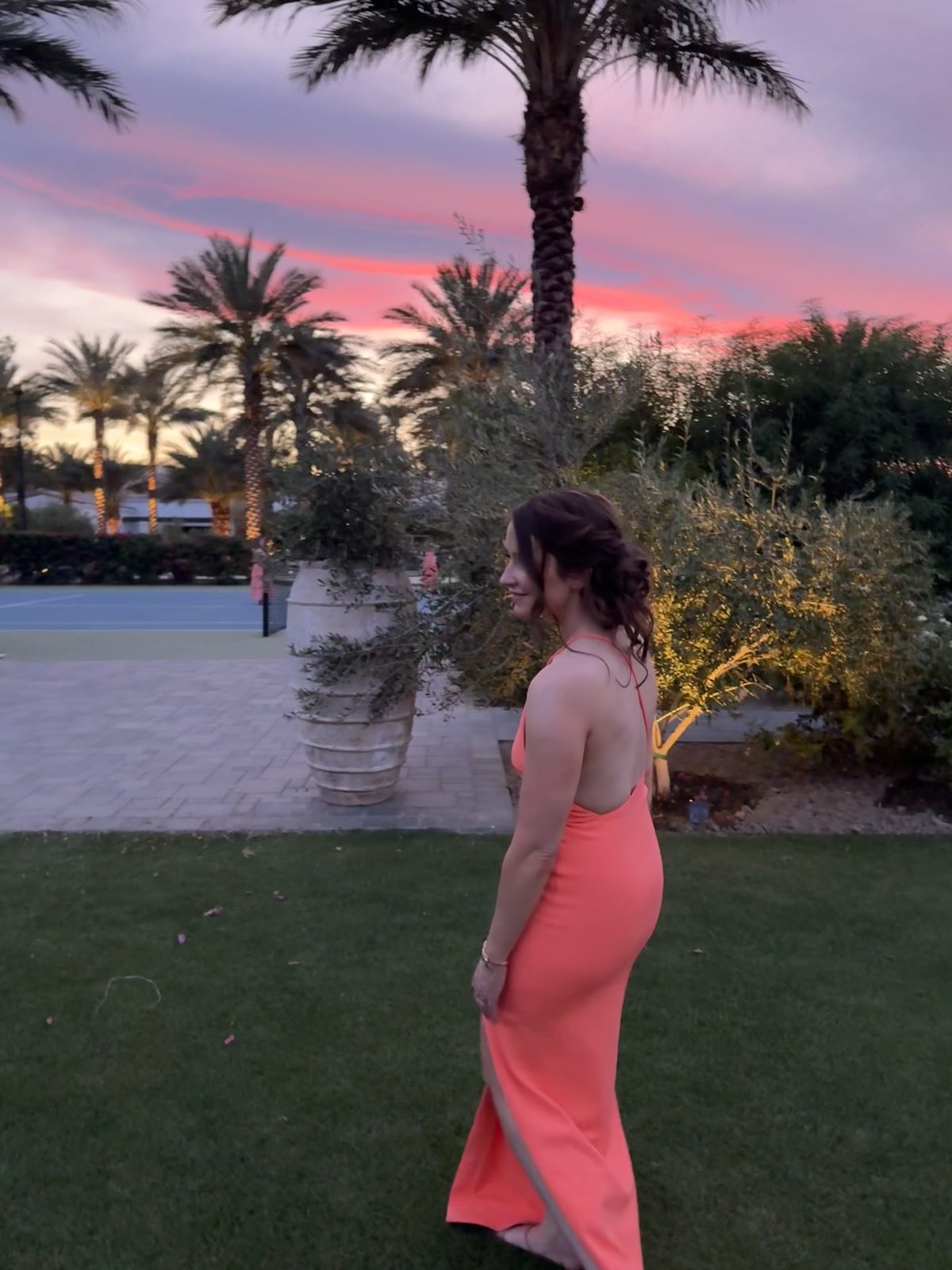
At my sister-in-law’s wedding in Palm Springs, more than one person told me I looked so good.
They meant it kindly. I said thank you, and I meant it too.
That’s the trip I wrote about in Permission to Crash — the one I spent the following weeks recovering from. Both of those things are true about the same weekend. Only one of them is in the photograph.
None of it shows.
That doesn’t make it easier to carry. It just means you stop getting the benefit of the doubt. The extra moment of grace. You look fine, and fine is close enough for most people.
What I actually carry:
A brain that survived a ruptured aneurysm. Ruptured brain aneurysms are fatal in about 40 percent of cases. I don’t have the kind of permanent deficit that shows up on a chart. What I have are symptoms. Quieter than a deficit. Harder to name.
Fatigue is the most persistent one — found in 50 to 70 percent of survivors years after the event. Not the kind you sleep off. The brain is doing work that used to be automatic, and it costs something every time. A word I know perfectly well won’t come, and I have to talk around it while everyone waits.
The hardest one to explain is regulation. I can see it happening in real time. I watch my response swell past what the situation deserves, I know it’s too big, and I still can’t stop it. That’s not a character flaw. That’s a brain that got injured.
A body in surgical menopause. When both ovaries come out, estrogen doesn’t decline gradually the way it does over years. It drops. Immediately. The symptoms are the same as natural menopause, only more sudden and often more severe, because the body doesn’t get time to adjust. Women who have both ovaries removed before 46 are more than twice as likely to develop mild cognitive impairment, with measurable declines in attention and executive function.
My brain was already navigating the aftermath of a rupture. Then I lost my ovaries too.
So it compounds. The fatigue compounds. The fog compounds. The dysregulation compounds. A hot flash arrives in the middle of a sentence and I finish the sentence anyway. The pelvic pain comes and goes without announcing itself. Headaches. A body that spent years fighting to stay in the world and is still, quietly, recalibrating.
Underneath all of it is the mental weight.
There’s grief in this. Not the acute kind — I’ve done that. This is quieter. You can see exactly who you expected to be by now, and you reckon with the distance between that version and where you actually are. I don’t begrudge myself the distance. I just feel it.
There’s anxiety that never fully leaves. A rupture leaves behind a low-grade alertness that lives in the body. The involuntary calculation when a headache starts. The faint noticing when something feels off. You survived, so the fear is supposed to be over. The nervous system doesn’t work that way. It remembers things the brain has already moved on from.
Depression and anxiety are documented aftereffects of both ruptured aneurysms and surgical menopause. What gets called weakness, or overreaction, or being too emotional has a physiological basis. It’s a body issue that became a brain issue that became a life issue.
For a long time I treated all of this as a phase. Something on the way to somewhere else. You do the surgeries, you do the recovery, and eventually you arrive at the version of yourself who was waiting on the other side.
There isn’t one waiting.
This is the baseline. Not a bad week. Not a rough stretch. The fatigue, the fog, the short fuse, the heat that comes out of nowhere — this is what I have to work with now, and it isn’t giving any of it back.
That took longer to accept than any of the surgeries did.
So I run the math. I know roughly what I have in a given day, and I’ve gotten careful about where it goes. Sometimes I can feel it coming and I say so out loud.
Sometimes that helps.
A few weeks ago I got into a fight with Patrick. Not a small one. I’d been running on empty for days — the kind of fatigue that sits behind your eyes and makes everything slightly too loud. Before it happened, I told him: I’m doing my best right now, but I’m about to lose it.
And then I lost it anyway.
The cause of the fight was legitimate. My reaction to it was not proportionate. Both were true at once, and I didn’t have enough left to hold them both carefully.
Then I apologized. I’m so tired of using the same excuse.
That’s the part that still gets me. Not the catastrophic things — I’ve mostly made peace with those. It’s the small failures. The moments I can see exactly who I want to be and my brain just doesn’t have what it takes to get there. Fatigue — the neurological kind, the hormonal kind, the cumulative kind — doesn’t leave much margin. And when the margin is gone, the first thing to go is the most refined version of yourself.
So. You look so good.
The phrase doesn’t see the neurological fatigue or the hormonal crash or the night I stood there watching myself lose it and couldn’t stop it. It sees the surface. And the surface has gotten very good at its job.
Most people won’t see the rest unless I tell them.
So I’m telling you.
I’m better than I was. That part is real. I’d choose this version of my life over any year I spent in the worst of it.
I’m also still in it — just differently. One day I’d like to stop apologizing for that.